
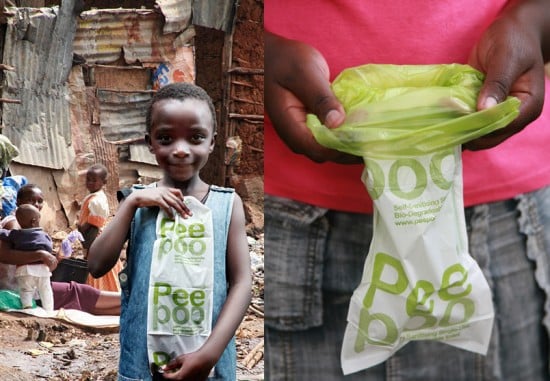
Every Friday, I’m going to try to introduce a new aid innovation/organization. This week: the Peepoo bag, somewhat predictably from the minds of the Swedes.
The Peepoo bag is a one-use personal toilet, a light green, biodegradable bag lined with a coating of urea. It’s meant to be placed in a bucket, or other convenient receptacle, used, and then tied up and buried. The coating of urea helps degrade any pathogens that exist in the feces and turn the waste into helpful fertilizer for the garden. According to their website, it’s already a big hit in the Nairobi slum of Kibera, where there are only 100 pit latrines (standard, drop latrines) for the entire population and most people defecate instead in black plastic bags, which they then toss into the streets (“flying toilets” or “helicopter toilets”).
This could be an extremely helpful innovation, especially for children (and the bags seem awfully small for adults…). But as always, there are caveats: people have to buy the Peepoo bags (they are sold per a social marketing scheme where “even the poorest can afford to buy them”), and have to have access to gardens or farms where the feces can be transformed into something more useful. Interestingly, the Kenyan interviewed in the video on Peepoo’s main website (which can be found here), said that the most interest in the product came from people who lived “up-country,” where farms are more prevalent.
The New York Times reports that the Peepoo bags should be in mass production this summer, after successful testing in Kenya and India.
Enjoy your weekend, and consider this question raised by the Mother Nature Network: are we all Peepoople?
