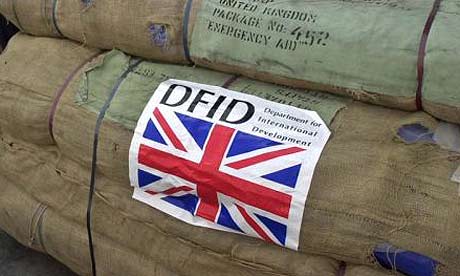
This week, Britain’s coalition government was accused of ”securitising” its international aid budget and demanding that British national security be placed at the heart of projects in the developing world.
The shift in aid policy, signaled in a document prepared by the Department for International Development (DFID), suggests that the National Security Council – Britain’s foreign policy watchdog – has requested that aid projects must make ”the maximum possible contribution” to national security. This shift in policy is expected to have the most impact in Afghanistan and Pakistan, both of which receive significant amounts of British aid.
A document describing the changes to DFID’s strategy was leaked to the London-based organization Left Foot Forward, which published the study. According to Left Foot Forward, nearly 100 projects aimed at helping the world’s poor are to be slashed under the new system (Left Foot Forward’s website appears to be down, but I will publish a link when it’s back up).
The UK has always managed to walk a line between adopting a poverty-based approach to foreign aid (like the EC) and one defined by the recipient country’s cooperation in the War on Terror (like the US). If this is to be the future of UK foreign aid, it looks like the line has finally been crossed. I do wonder, though, whether the timing of this announcement was determined by the crisis in Pakistan.
*Here is a link to the original report by Left Foot Forward*
