Cell phones and the internet are widely considered to be some of the most important tools in speeding up development in much of the world: businesses can grow faster with wider access to customers and advanced technologies, doctors can stay in touch with patients and keep more sophisticated medical records, and educational opportunities vastly increase. But…have you ever tried to access the internet in parts of the developing world? Perhaps in a small shack with peeling yellow paint surrounded by chickens, as I did in Botswana? It’s not easy!
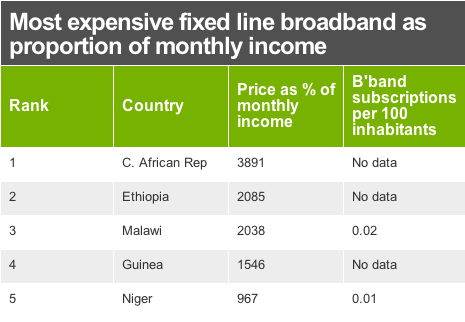
The UN is releasing figures on the disparity in broadband access and reliability in much of the developing world. Read the BBC’s article here.
Currently, more than 30 countries have agreed to work on improving broadband access throughout the world. They agree that “access to broadband – access to information – should be a universal human right.”
