
This Friday, I went with some colleagues to the STAR-TIDES demonstration at Ft. McNair in Washington, DC. The exposition allowed professionals in the development field to interact, see, and discuss the policies, practices, technologies, and organizations that affect Humanitarian Assistance/Disaster Relief, Stabilization and Reconstruction, Building Partnership Capacity, and Defense Support to Civil Authorities. My colleagues and I don’t have much of a background in the military or military-related development, but we were there to see what new aid-toys we could find.
As it turned out, unless you had several million dollars lying around or were the U.S. military, there wasn’t much to see. Everything was incredibly expensive and the people who invented the toys had no experience working abroad. I did take some pictures, though:
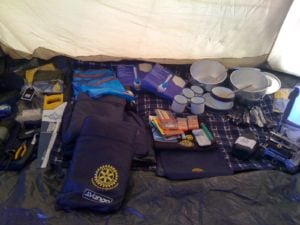
This picture shows the contents of the ShelterBox. The ShelterBox is designed to provide everything a family of up to ten would need to survive for up to 18 months (not including food). The box includes mosquito nets, thermal blankets, pots and pans, cutlery, various tools and other amenities…it was actually pretty cool, but since each costs $1,000 the organization does most of its business with governments, not NGOs or other aid organizations. It was fun to see, and I especially liked the pictures in the brochure of camels carrying them.
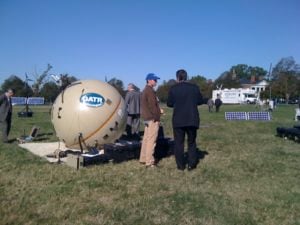
This big, fun-looking ball is part of a complicated mobile telecommunication system. I didn’t get the spiel about this one because the man in the hat was trying to sell it to the man in the suit, but I thought it looked interesting. As you can see, there were also several solar power units on display, as well as a bunch of solar-powered ovens (they made us popcorn). Overall, it was an interesting exposition.
