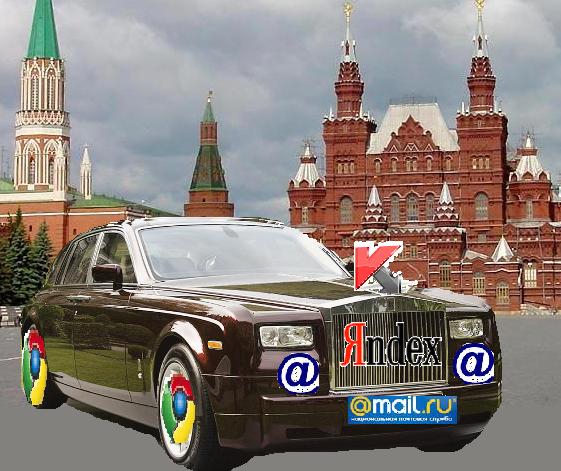
As the number of Russian billionaires swells to record numbers (101 from last year’s 62) – recession be damned! – old-school raw materials magnates face competition from a new breed of internet entrepreneurs.
According to the FT, the Forbes list – long the preserve of well-connected oligarchs that had made their fortunes from ex-state assets sold in the murky early 90s – is fast becoming populated by IT newcomers, “thanks to the rapid growth of the internet in Russia, where penetration rates are said to resemble those of the US in 1999”. Writes Courtney Weaver:
Yuri Milner, chairman of Mail.ru, the London-listed internet giant, joined the top 100 this year with an estimated personal wealth of $1bn, while not far behind are Arkady Volozh and Ilya Segalovich, the co-founders of internet search engine Yandex, and Evgeny Kaspersky, chief executive of Kaspersky Labs, the antivirus software company.
Some old mineral barons are beginning to invest their wealth into startups, too.
Seeing big bucks made from new technology as opposed to cannibalising the country’s natural resources is a welcome trend, one that could finally break the popular notion that the only road to success in Russia is through oil, gas or minerals, big fists, and a whole lot of government ‘krysha’.
However, the list also showed the enduring symbiosis between money and power in Russia.
As her husband Yuri Luzhkov was deposed as Moscow Mayor, Elena Baturina, who had long insisted that her billions from lucrative construction contracts had nothing to do with connections to the city’s ‘chief builder’, saw her fortune plummet from $2.9bn to $1.2bn. Coincidentally enough.
