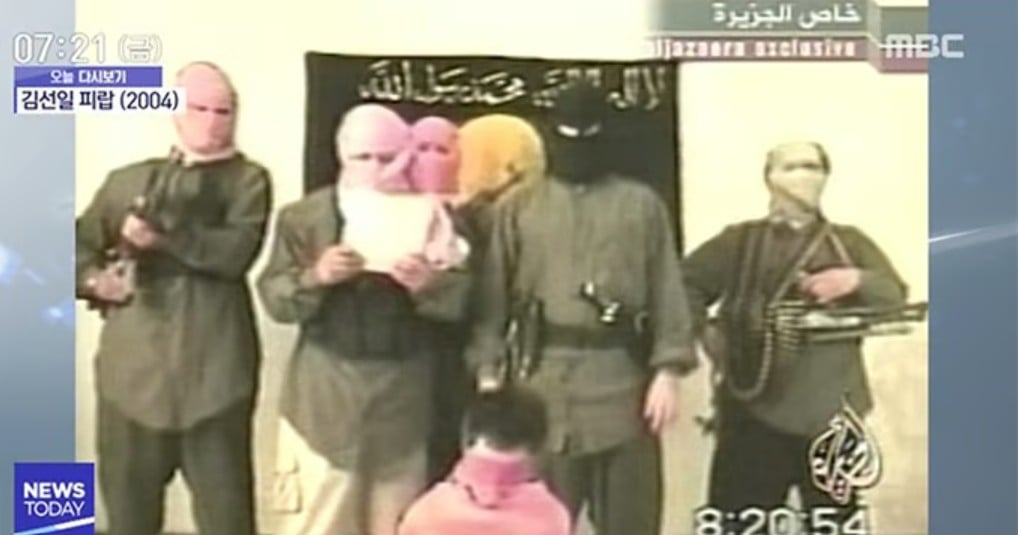
June 20, 2004—South Korean national Kim Sun Il was brutally beheaded by an al-Qaeda-linked extremist group, a tragedy that underscores how the spread of Islamic extremism—fueled in part by Iran’s 1979 revolution and, as Saudi Crown Prince Mohammed bin Salman has acknowledged, the export of radical ideology—continues to claim the lives of innocent civilians simply because of their countries’ alliances.
On June 22, 2025, in a moment of blistering clarity, the Iranian regime stripped away the last fig leaf of plausible deniability. In a declaration broadcast on state television, Tehran vowed that “every American citizen or military personnel in the region is now a target.” This was not a coded message, nor a vague allusion—it was a direct threat against innocent civilians, a calculated act of rhetorical terrorism from a regime unraveling in the wake of its own miscalculations.
The context is clear: mere hours before this pronouncement, US-led strikes had decisively disabled critical components of Iran’s nuclear infrastructure. It was a blow aimed at halting Tehran’s march toward nuclear armament—one that, in the absence of good-faith diplomacy from Iran, had become necessary. But instead of addressing its own provocations, the regime lashed out with characteristic fury, scapegoating Americans—military and civilian alike—as acceptable collateral in its campaign of revenge and propaganda.
Let’s not mistake this for a novel turn. Iran’s leaders are not new to the politics of terror. Since the Islamic Revolution of 1979, they have deployed violence not just as a defensive tool, but as a primary mechanism of statecraft. Whether through the brazen hostage crisis of 1979, the devastating Beirut bombings of 1983, or the countless proxy attacks on US troops across Iraq and Syria in the decades since, the Islamic Republic has honed a consistent strategy: when diplomacy falters or its ambitions are thwarted, it targets the innocent.
This is not the tactical desperation of a beleaguered nation. It is the doctrine of a regime that views terrorism not as a shameful aberration but as a legitimate expression of power. And with this latest threat—an open call to murder civilians—it has once again reminded the world of its moral bankruptcy.
The regime’s calculus is cynical but revealing. It cannot defeat the United States militarily. Its conventional forces are outmatched, its economy is strained, and its legitimacy is eroded both domestically and abroad. So it falls back on its tried-and-true method: asymmetrical terror. It empowers proxies, radicalizes militias, and weaponizes fear—hoping that the West, weary of endless conflict, will trade justice for quiet, and leave tyrants to rule without consequence.
What Tehran perhaps failed to calculate is how utterly this declaration confirms everything its critics have said for decades. For years, some insisted that Iran’s aggression was reactive, that its support for groups like Hezbollah and Hamas was strategic rather than ideological, that it could be coaxed into moderation through economic engagement. But threats to murder civilians—for the crime of holding a blue passport—leave no room for such illusions. This is not realism. This is raw, unreconstructed terrorism.
And yet, this moment must not be wasted on outrage alone. The United States and its allies must recognize that this is more than a rhetorical shift; it is a declaration of intent. Every American in the Middle East is now living under a threat sanctioned by a sovereign government. That is an extraordinary—and extraordinarily dangerous—development.
It also places an urgent burden on the international community. The rules-based order cannot survive if state actors are allowed to incite violence against civilians without consequence. The targeting of innocents must remain a red line—not just in theory, but in enforcement. If the regime in Tehran is allowed to get away with this, it will not be the last to abandon international norms in favor of the politics of fear.
Ultimately, the Iranian regime has revealed what it truly is: not a misunderstood player seeking regional autonomy, but a paranoid, theocratic oligarchy whose first instinct in crisis is to threaten murder. That instinct—nurtured over decades, bolstered by proxy wars, and now made explicit on national television—should end any remaining debate about its nature.
The world has been warned. Now it must respond
