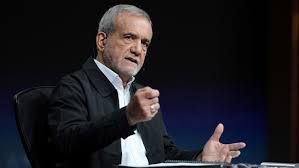
At a time of heightened geopolitical tension in the South Caucasus, Iran’s President Masoud Pezeshkian selected Armenia as his first destination. The visit aimed to preserve regional balance, strengthen economic and transport ties, and respond to Western-backed initiatives threatening to sideline Tehran near its northern frontier.
Iran and Armenia share a border and centuries of intertwined history. During his trip, President Pezeshkian referred to Armenia as a “friend and neighbor,” emphasizing that the goal was not only to sign new agreements but also to accelerate the implementation of earlier commitments in economic, cultural, and social fields.
Tehran’s concerns were sharpened by the U.S.-brokered “Trump Route for International Peace and Prosperity” (TRIPP), which proposes linking mainland Azerbaijan to its Nakhchivan exclave via Armenian territory. Iranian officials viewed this as a plan that could diminish Iran’s regional leverage. Pezeshkian’s visit sent a clear signal that Iran rejects projects undermining its influence in the South Caucasus.
The visit carried a strong economic agenda. Both governments prioritized energy partnerships, trade expansion, and infrastructure development. Multiple agreements were signed covering pipelines, electricity grids, and new transport corridors. The two sides set ambitious trade goals: reaching $1 billion annually in the near term, with plans to expand to $3 billion in the next phase.
The United States has become increasingly active in regional mediation between Armenia and Azerbaijan. By traveling to Yerevan, Pezeshkian reaffirmed Tehran’s intent to remain a key stakeholder. Consistent with Iran’s long-standing policy, his administration reiterated support for Armenia’s territorial integrity and voiced opposition to projects such as the controversial Zangezur corridor.
Beyond hard politics, the visit also highlighted cultural and humanitarian ties. From historic Persian architecture in Armenia to the Iranian cultural center in Yerevan, symbols of shared heritage remain important pillars of bilateral relations. Pezeshkian stressed that cooperation is not limited to state contracts but is grounded in mutual understanding and centuries of friendship.
By choosing Armenia at this critical juncture, Iran’s president sought to:
— defend Tehran’s influence in a rapidly shifting regional landscape,
— resist Western-backed projects near its border, and
— deepen economic, cultural, and political ties with a trusted neighbor.
The move was both pragmatic and symbolic — a reminder that Armenia remains a vital corridor for Iran’s ambitions in the South Caucasus.
Author
Rachel Avraham
Rachel Avraham is the CEO of the Dona Gracia Center for Diplomacy and the editor of the Economic Peace Center, which was established by Ayoob Kara, who served as Israel's Communication, Cyber and Satellite Minister. For close to a decade, she has been an Israel-based journalist, specializing in radical Islam, abuses of human rights and minority rights, counter-terrorism, the Israeli-Palestinian conflict, Azerbaijan, Syria, Iran, and other issues of importance. Avraham is the author of “Women and Jihad: Debating Palestinian Female Suicide Bombings in the American, Israeli and Arab Media," a ground-breaking book endorsed by Former Israel Consul General Yitzchak Ben Gad and Israeli Communications Minister Ayoob Kara that discusses how the media exploits the life stories of Palestinian female terrorists in order to justify wanton acts of violence. Avraham has an MA in Middle Eastern Studies from Ben-Gurion University. She received her BA in Government and Politics with minors in Jewish Studies and Middle Eastern Studies from the University of Maryland at College Park.