Foreign Policy Blogs

Energy & Environment

CEIP discussion on the prevention of future food crises

The Carnegie Endowment for International Peace (CEIP) held an event on April 8, 2009 with Professor Olivier De Schutter, UN Special Rapporteur on the Right to Food.  Professor De Shutter presented an analysis of the global food crisis titled “From Malthus to Sen.”  Following his remarks, he took questions from Steven Schonberger from the World […]
read more

Seeing the Forest for the Trees: Shaping Financing to Prevent Deforestation

The Waxman-Markey bill signals Washington’s intentions to pony up to fund deforestation prevention as part of overall climate legislation. But will climate scientists, C-15 negotiators, developing countries and environmental groups agree on an international forest protection program that everyone, including the trees, can live with? Scientists and climate policy makers now agree that saving forests […]

read more

A Swing – and a Miss

I was surprised to learn that the White House science advisor, John Holdren, who I have lauded here, along with most of the other Obama appointees working on energy, the environment and climate change, has said that geoengineering should not be “off the table.”  See Obama climate adviser open to geo-engineering to tackle global warming […]

read more

New FPA Resources on Global Food Crisis

The Foreign Policy Association has posted a Great Decisions 2009 Spring Update on its website.  The Update compiles important news items from the past few months and is an excellent way to stay up to date on the each of the eight U.S. foreign policy and global affairs issues covered in Great Decisions 2009. There […]

read more

Energy Policy: The gloves come off

Energy Policy: The gloves come off

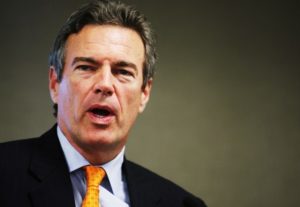
In one of the most candid assessments of the direction of US energy/environmental policy, Anadarko chief James Hackett blasts the current focus on carbon dioxide reduction. (Financial Times – registration required). The histrionic and maniacal focus on carbon dioxide is intellectually repugnant to me. He added that it is “taking the economy into a tailspin.” […]

read more

Bonn

There are a series of UNFCCC meetings this year leading up to the Copenhagen Conference of the Parties – the 15th COP.  As you know, Copenhagen is where the post-Kyoto agreement is going to be finalized.  The first of the five planned negotiating sessions leading up to the COP wrapped up in Bonn last week.  […]

read more

Westward Ho! Hong Kong Tycoon Invests in Africa-based Biofuels

Hong Kong magnate Stanley Ho is at it again. Not formulating a “Ho Plan” for Hong Kong energy security that centers around wind power, as the growing similarities between him and T. Boone Pickens might suggest. Stanley Ho’s investment du jour, while on par with his recently established eco-trend, will not be in Asia. Rather, […]

read more

Oil, oil everywhere

Oil, oil everywhere

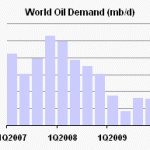
The world is swimming in oil. This coming less than one year after record high oil prices and when the world was running very low in spare capacity (the difference between what can be produced and the amount demanded and the linchpin to lower prices). US inventories are at record levels. Tankers are sitting off […]

read more

Denial World

A question arose for me the other day:  How would the world regard the Skeptics/Denialists if they were Holocaust Deniers?  The short answer is the “NY Times” wouldn’t have a cover story in their Sunday magazine on a prominent and well-regarded scientist who is, for whatever inexplicable reason and using whatever tortured logic, an outspoken […]

read more

"Progress has plateaued" on U.S. food safety

The recent salmonella outbreaks in peanuts and pistachios may have been wake-up calls to the public about the dangers of food-borne illness, but U.S. agencies that measure food safety have seen how “progress has plateaued” in government efforts to combat contamination of U.S. food supply. The U.S. Centers for Disease Control (CDC) has released its […]

read more

Kyoto Box

Here is a big boost for low-tech, low-cost, potentially very high-impact solutions to “dangerous anthropogenic interference” (DAI) with the climate system:  a solar-powered cooker that costs less than $5 to build.  I wrote about the FT’s Climate Change Challenge last month here.  The FT and its partners, Forum for the Future and HP, are providing […]

read more

Somali hijackers take over U.S. ship delivering food aid

The danger of delivering food aid in unstable regions or conflict zones was further illustrated by yesterday’s hijacking of a U.S. cargo ship by Somali pirates.  The Maersk Alabama was delivering food supplies to East African countries for several aid organizations: “‘The vessel’s manifest showed it was carrying 401 containers of food aid from USAID, […]

read more

Empire State Building

This world icon is getting a makeover.  The ESB is “…undergoing a major sustainability retrofit to become a leading example of economic and environmental revitalization.”  This is a critical milestone in the battle to lower energy use and thus lower GHG emissions because the building is so famous and glamorous.  The project partners have created […]

read more

Aid workers faced "most dangerous year" in 2008

A joint report issued by the Center on International Cooperation (CIC) in New York and the Overseas Development Institute in London cited that 122 aid workers were killed and over 260 were attacked in 2008 while conducting aid programs, making it the most dangerous year for aid workers. A Reuters article quotes Abby Stoddard from […]

read more

Interior Secretary Salazar goes on tour

Interior Secretary Salazar goes on tour

Secretary began a four-city tour this week to discuss ideas for harnessing the energy potential of offshore areas. He has made broad claims regarding resources offshore such as windpower off the coasts can produce the energy of 3,000 coal-fired plants as he boasts about offshore’s energy potential. He is likely to face resistance in opening […]

read more