
A leading naval strategist asks: Could cyberattacks actually prevent war?
A leading naval strategist asks: Could cyberattacks actually prevent war?

Is the U.S. accidentally preparing for World War I again? In this two-part series, leading thinkers from a prior era of globalization instruct us on maritime and cyber security today.

Our five favorite longreads and blog posts from the past week.

A “regional AUMF” would codify the long-standing practice of executive “doctrines” governing U.S. policy towards particular regions.
As many as 18 million current, former and prospective federal employees — ranging from military personnel to the IRS — are now thought to be affected.

Our favorite longreads and blog posts from the past week.

Our favorite longreads and blog posts from the past week.

The 100,000 Strong Education Initiative represents a transformational partnership since both the U.S. and China remain committed to the project’s goal of sending and receiving students for language, cultural, and academic exchanges.

Recently, two major developments in Somalia and Djibouti have attracted international media attention. John Kerry became the first U.S. Secretary of State to visit Mogadishu, while China has negotiated the construction of a military base in the strategic port of Djibouti.

In her new book Everyday Ambassador (Atria Paperback), Kate Otto lays out a program for young people seeking to make a difference.
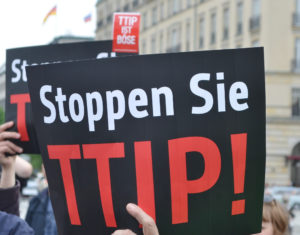
With all the attention turned to the Trans-Pacific Partnership (TPP), currently negotiated by the U.S. with 12 Asian countries, few seem to notice anymore the equally important Transatlantic Trade and Investment Partnership (TTIP) between the European Union and the United States.

The current debate over political advertising in the Washington, D.C.-area transit system moves the issue from “free speech” to “public safety,” and probably toward the Supreme Court.

Our favorite longreads and blog posts from the past week.

Bernanke’s speech back in 2002 can help shed some light on the question of how asset prices have been taken under consideration in the past by the Fed. It also helps explain how these prices will affect monetary policy in the future.

The concept of the fair market and protection for consumers is based on the idea that inefficient and corrupt practices by large private companies and wayward government officials increases the cost to the consumers and the public.