Foreign Policy Blogs

Topics

Health News…

Health News…

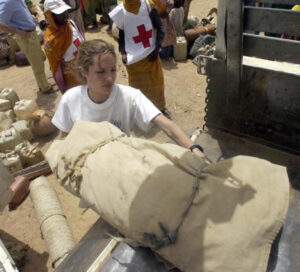
The skills of women who work as birth attendants in rural Uganda are extremely important to the well-being of both mothers and babies. Charity groups are trying to train many of these birth attendants as far too many still rely on traditional and outdated approaches to assisting labor. The Guardian (London)) Healthcare threatened by political […]

read more

Red Flag Day!

Red Flag Day!

February 12 is the annual commemoration day to draw attention to the use of children in armed conflict and war. The Optional Protocol, Article 4, 6.3, adopted by the General Assembly in 2002 stipulates that state parties "shall takes all feasible measures to ensure persons below the age of 18 do not take a direct […]

read more

Teenage Athlete, Brings Hope to a Nation

Teenage Athlete, Brings Hope to a Nation

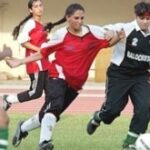
It has been historically proven that sports bring people and countries closer together, that is what the Olympics has stood for, and ever four years it brings stories of triumph, inspiration and hope. But the Olympics are not the only sports arena where battles have been fought, for many girls around the world sports was, […]

read more

Slate on Philanthropy

Slate published a series on philanthropy today. The cover story is about what they call the “Slate 60”, a list of the 60 largest charitable contribution in the US. It is an annual series with a stated goal of inspiring the wealthy to compete for the top spot. Why 60? I have no idea. Maybe […]

read more

U.S. government seeks death for KSM.

The U.S. Defense Department said Monday it will ask for the death penalty for six high-value targets at Guantanamo Bay, including the alleged mastermind of the Sept. 11 attacks, Khalid Sheik Mohammed. The legal advisor to the military commission overseeing the Guantanamo Bay cases, Brig. Gen. Thomas Hartmann, said the men will be charged with […]

read more

Street Children in Egypt

Street Children in Egypt

"Street children…are prey to anything and they know things children should not." – Nevine is 18, has lived on Cairo's streets for 4 years (Still dreaming of a better future : a Cairo street girl recounts her traumatic experiences). The issue of street children is nothing new on the international children's right radar, however in […]

read more

Afghanistan, NATO and the Warsaw Pact

From 1979 to 1989, the Soviet Army attempted to occupy Afghanistan and defeat an insurgency of Afghan rebels. They failed and two years later found their own country falling to pieces and with it, the Soviet Bloc's collective security alliance, the Warsaw Pact. Although, the Russian Afghan War was not the main reason the Soviet Union […]

read more

Handouts with Conditions

Another Economist article caught my eye this week, it discusses a conditional cash transfer (CCT) program in Brazil, Bolsa Familia (Family Fund). CCT programs give poor families money if they meet certain conditions, usually participation in public health programs or educational sessions. Programs like the one in Brazil have been tried in many Latin American […]

read more

The Limits of Leapfrogging

This week's Economist contains two articles that discuss leapfrogging technology – when a society skips a generation in technology. The usual example is the cell phone, which a developing country can adopt without ever having had widespread landlines. Both Economist articles refer to a World Bank report on Global Economic Prospects. Leapfrogging is usually seen […]

read more

Overseas Reaction to Super Tuesday

Last Thursday, Public Radio International broadcast (or click here) a very interesting discussion of the overseas reaction to the Super Tuesday primaries. National Public Radio's Tom Reagan also gathered some reporting on the US election in foreign countries on NPR's blog. Here are a few others to build on it. A London Times analysis calls super Tuesday's results […]

read more

AFRICOM–A Different Kind of Command

AFRICOM–A Different Kind of Command

The Voice of America reported yesterday on the Department of Defense's plans for its U.S. Africa command, or AFRICOM. While NPR reports that the idea to create the new command was “has kicked around the halls of the Pentagon for more than a decade,” the command was recently created so that US-Africa military liaisons be […]

read more

Drought, Storms and the Food Chain

Water in the West , This is a subject of intense and enduring interest.  There is a magisterial treatment of this in the book, Cadillac Desert, from 1986.  A new analysis of data from researchers at the Scripps Institution of Oceanography "shows that climate change from human activity is already disrupting water supplies in the […]

read more

Counter-Terrorism Standing in the Way of Charity?

The Christian Science Monitor ran on op/ed by Ian Wilhelm last Friday. He contends that US-backed policies to control charitable giving in the Muslim world are making it more difficult for wealthy Muslims to donate money. Since 9/11 the US has been understandably concerned with Muslim charitable foundations – some of which are suspected to  […]

read more

Remittances No Replacement for Sound Policy

This paper written for the UN Research Institute for Social Development reviews empirical studies on the effects of remittances in developing countries. The conclusion is that they have the potential to spark overall development, but that social policies and economic reforms are required to allow this potential to be realized. It sounds like common sense […]

read more

"We Are All Captivated"

Super Tuesday brought a wave a foreign commentary, most of it positive, on the U.S. campaign and candidates.  One of the most interesting was Timothy Garton Ash's piece in The Guardian.  For Garton Ash, the remarkable degree of world-wide attention to the U.S. electoral showdown pointed out a lack of such attention to U.N. and […]

read more