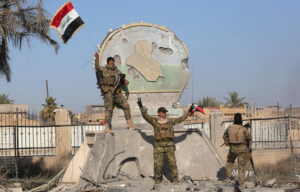
ISIS’s increased activity abroad is a sign of weakness rather than strength: the group has lost around 20% of its territory in Syria and over 40% in Iraq since its peak expansion in August 2014.
ISIS’s increased activity abroad is a sign of weakness rather than strength: the group has lost around 20% of its territory in Syria and over 40% in Iraq since its peak expansion in August 2014.
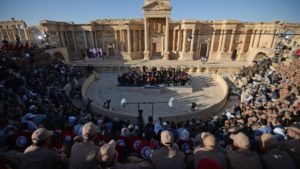
The ancient city of Palmyra has been the stage for mass executions, the destruction of cultural heritage, battles between ISIS and Syrian government forces, and now in an absurd turn of events, a concert put on by Russia’s Mariinsky Theater Orchestra.
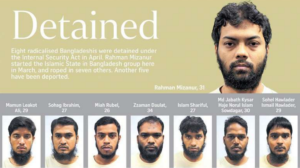
On May 3, Singapore announced that it had detained 8 Bangladeshi workers in April for their alleged membership to the Islamic State in Bangladesh and on suspicion of planning attacks.

Terrorism has always been “international”, but what that means has changed as technologies and ideologies have advanced rapidly over the past 150 years.

Despite the EU and the US confirming this fact, the Canadian government has resisted calling the atrocities taking place in Syria and Iraq a genocide.
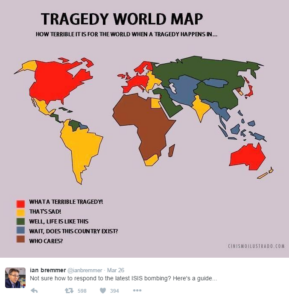
When attacks such as the one in Paris last year or the latest in Brussels take place, the world rises up in solidarity. Having spent the better part of my life in Pakistan, I know that our loss is ours alone, any solace we seek must come from within our borders.

After declines following attacks by Somalia-based militants and piracy, Kenya’s $1 billion a year tourism sector looks set to for a robust recovery in 2016.

The Islamic state has claimed responsibility for the two attacks in Brussels, Belgium.
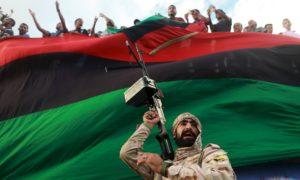
ISIS’ growing activity has caught the attention of U.S. officials who see no other option than to address the Islamic State threat in Libya with military action.

ISIS’ potential acquisition of radioactive material puts forward a scenario in which the extremist group may try to produce and use a “dirty bomb”.
Lacking outside alliances and with the geopolitical situation slowly starting to tilt against it, Islamic State’s pretensions to act as a legitimate government seem to have its days numbered.

Since preventing terrorist acts is extremely difficult—why take any chances by allowing fighters to return?

One country on the forefront of the battle against the Islamic State is Indonesia, home to the world’s largest Muslim population, which has over the past year successfully crushed militant cells.

Militarism and terrorism are on dangerously accelerated course. Both are driven by men with myopic vision who galvanize the uninformed masses with half-truths and propaganda that are seldom exposed.
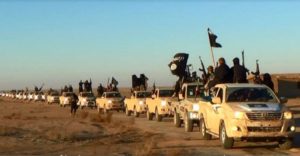
In quick succession, the set of ISIS attacks in Paris, Sharm el-Sheikh and Beirut suggest that the group has crossed a threshold for international terrorism.