
Where governments are unable or unwilling to venture, at least publicly, for fear of losing credibility with their electorates or their allies, parallel diplomacy can offer a way forward.
Where governments are unable or unwilling to venture, at least publicly, for fear of losing credibility with their electorates or their allies, parallel diplomacy can offer a way forward.
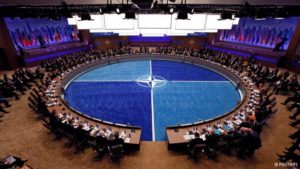
In 1939, an article entitled “Mourir pour Dantzig?” (“Why Die for Danzig?”) argued that France should avoid war with Germany if the latter seized Poland. Today, the Russian-Ukrainian conflict, as well as Russia’s belligerent foreign policy, leads us to ask similar questions.
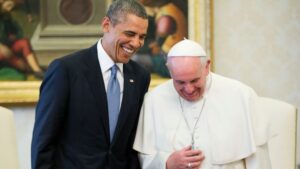
He is outspoken on migration and refugee issues, was involved in brokering an upgrade in U.S.-Cuban relations and takes part in debates on hot-button topics from income inequality to climate change. Francis’ view of the papacy is clearly geopolitical.
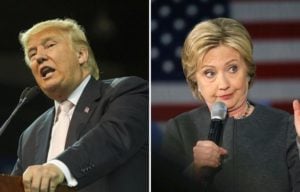
The only cure for the wariness that defines this year’s election is for Americans to find common ground, not so much among political operatives of left and right, but rather between those who govern and the general population.
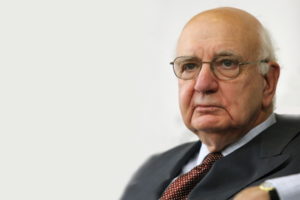
We are in a world of economic frustration, breakdown of order, armed conflict, and a seeming vacuum of responsible leadership. Who among us can view with any satisfaction the current manifestation of our own electoral processes, much less our role as international leader?
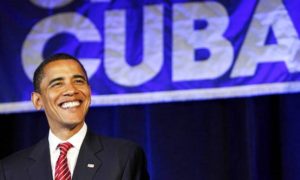
On March 15, President Obama announced that certain travel restrictions between the United States and Cuba would be reduced in preparation for his visit to the small island country.

In a show of counterforce, the U.S. has sailed an aircraft carrier, two destroyers, two cruisers, and the command ship of the Japan-based 7th Fleet into the disputed waters of the South China Sea.
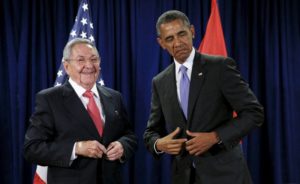
Obama has already begun the process of normalizing relations with Raul Castro’s government. However, it will fall upon the next U.S. President to end the island’s economic isolationism.
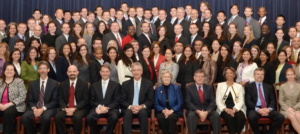
Visually and narratively attractive, packed with little-known facts and eye-catching clips, the film paints a faithful portrait of the U.S. Foreign Service while fair-mindedly probing a range of issues.
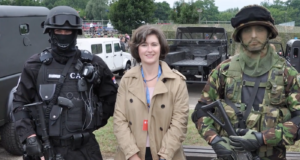
While much of the media focuses on U.S. foreign policy failures, scandals, or intra-agency turf battles, this film reminds us that the career personnel are talented, dedicated people whose commitment to public service and American interests includes considerable sacrifice.
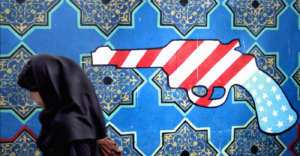
“America’s Diplomats”, the Foreign Policy Association latest production is a must-see documentary for anyone interested in the history of American diplomacy or considering a career in the Foreign Service.

Americans have long had a disdainful attitude toward diplomacy and diplomats, seeing the whole endeavor as something elitist, foreign, expensive, and possibly deceitful.

Kennan’s is considered the architect of the Cold War strategy. Today’s diplomats are still expected to provide the kind of expert advice that helps set the policy course for the nation.

Ever since 9/11, counterterrorism has permeated U.S. foreign policy. Throughout the world, American embassies have turned into fortresses, though diplomacy does not function in seclusion.
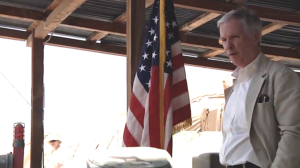
Diplomacy today is changing, especially with regard to technology and the availability of instant communication. Imagine how the Cuban Missile Crisis might have unfolded differently in our time.