
This week’s must reads brought to you by the editorial staff at ForeignPolicyBlogs.com
This week’s must reads brought to you by the editorial staff at ForeignPolicyBlogs.com
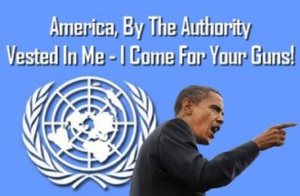
Regular readers of Foreign Policy Blogs may be familiar with the U.N. Arms Trade Treaty (ATT). Trevor Keck and Joe Gurowsky, for instance, have touched on the topic in earlier posts. Having been approved by the General Assembly after two decades of advocacy, the treaty will open for signature on June 3. It will go into […]
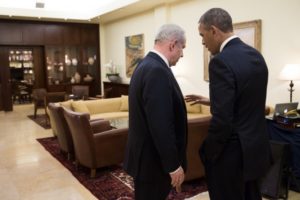
By Sarwar Kashmeri United States’ intelligence agencies and Israel’s Prime Minister Benjamin Netanyahu are still not certain the Syrian government of President Assad has used chemical weapons against its opposition. Nothing has yet emerged from France, Germany or Britain to unequivocally confirm this charge either. But the clamor among the hawkish segment of Washington lawmakers to get […]

There is a good rule taught in newsrooms early in one’s reporting life that goes along the lines of why one should listen to so-called crazy people. It is because, sometimes, they actually say the truth. By dint of luck or perhaps true insight, Syrian President Bashar al-Assad has stumbled into that equation. He warned […]

The Rise of Big Data By Kenneth Neil Cukier and Viktor Mayer-Schoenberger Foreign Affairs The Internet may have transformed the way we do business, live and govern, but a lesser-known technological trend, “big data,” has also been making waves. The premise — that we can learn more from a large body of information things than […]

Masai Ujiri took an unconventional route to the pinnacle of National Basketball Association (NBA) team management. Now he is watching his Denver Nuggets’, a team he built in just three seasons as general manager, attempt to make a run at an NBA championship. Ujiri grew up in the central northern region of Nigeria, in the city of Zaria, a city that has […]
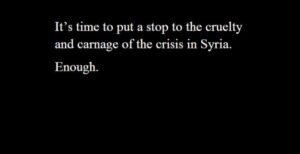
Syria is deteriorating before the world’s eyes. What is being done to stop this? At the U.N., a new crisis appeal entitled “Enough” features the heads of U.N. humanitarian agencies appealing for support in alleviating the humanitarian situation in the country and imploring an end to the diplomatic standoff that is fuelling the violence. The video […]

Even Violent Drug Cartels Fear God By Damien Cave The New York Times Magazine “If the economy worked for the common good, there would be no Zetas. There would be no cartels,” says Robert Coogan, the chaplain at Cereso. Here the Zetas, Mexico’s most feared crime syndicate, run operations from the inside. And they […]

Beneath a vaulted marble sky adorned in constellations of angels, dragons, man and beast, former British Prime Minister Margaret Thatcher’s coffin spent the evening before her funeral cloaked in the Union Jack inside the neo-gothic Chapel of St. Mary Undercroft. Parliament, the starting block of Thatcher’s rise to iconic power, hovers above the Chapel in […]
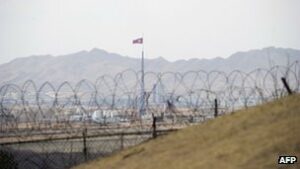
Years of patient diplomatic efforts by China with its belligerent neighbor North Korea seemed to be coming to an end on Saturday, following Beijing’s public announcement of an agreement with the U.S. on ridding North Korea of nuclear weapons. The action comes after last Sunday’s early warning shot by China’s President and CCP Secretary General […]

But the obfuscation, or confusion–it’s your call–in the Boston Bomber case is masterful. Now we hear reports that Ali Alharbi the young Saudi national in Boston on a student visa, the same young man authorities released after questioning him so he could ‘get back to classes'(and who issued the order to release him is still unknown)is under a DHS-issued deportation order based on an investigation that determined he has ‘suspicious terrorist ties’ and has been determined by the US government to be ‘a security risk.’ (Please see my blog of February 26–“ICE Agents Claim Napolitano Forcing Them to Violate U.S. Law–New Immigration Directives Invitation to Terrorists and Cartels.”
QED: let’s assume enforcement officials used the fact that Ali Alharbi had been investigated and was scheduled for deportation, and that it was this information, that the young man had already been tagged as a ‘national security risk,’ that helped authorities convince a judge that a search warrant was in order.
So what’s happening now? Will the Saudi student with the black backpack be retained in the US while enforcement officials continue to work with him to obtain more information? Keep him around, look for connections, leads, associations? Makes sense, don’t you think?
Not to the FBI, apparently, nor to Janet Napolitano, who heads the Department of Homeland Security (DHS). DHS, it is rumored, is said to be following through with Alharbi’s deportation and getting ready to send him back home to Saudi Arabia.
The administration wants that boy gone.
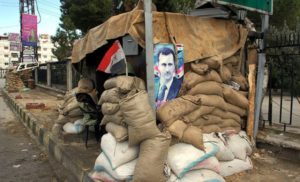
by Abul-Hasanat Siddique and Casper Wuite Abul-Hasanat Siddique and Casper Wuite, co-authors of The Arab Uprisings: An Introduction, talk about the political unrest in the Middle East, the Syrian Civil War, the globalization of media, and the future prospects for the region. Is the unrest in the Middle East and North Africa homegrown or a Western-sponsored revolution for change? Abul-Hasanat Siddique: Home-grown. […]

A few weeks back I contributed to an Atlantic Community theme week on Security Issues in the Sahel. The result was Atlantic Memo #43, Security in the Sahel: Regional Initiatives in Pursuit of Long-Term Stability (pdf, web). The memo has already received a response from Dr. Thomas Bagger, Head of the Policy Planning Staff of […]

Division, a word so simple yet characterized by many intricacies has led mankind through its political evolution. The development of the modern nation-state, which was birthed by the Peace of Westphalia in 1648 was based on it. The United States and the Soviet Union threatened to lob nuclear weapons at one another, in part because […]

Each week, the editorial team at ForeignPolicyBlogs.com publishes a list of must-read articles from around the web. This week: Tweeting diplomacy, Cuba, Jordan, the U.S. in Pakistan, and one article on Margaret Thatcher.