
Wishing to appear strong and confident, China’s rulers only reveal their own weakness and fear through such absurd ideological campaigns.
Wishing to appear strong and confident, China’s rulers only reveal their own weakness and fear through such absurd ideological campaigns.
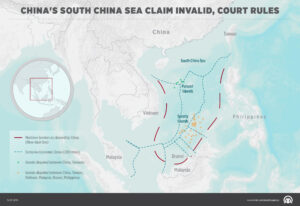
In the fourth installment of the virtual roundtable, Prof. Toshi Yoshihara discusses U.S.-China relations, in the light of the Hague’s court ruling.
When the result of the arbitration on the South China Sea dispute was announced, the Chinese government and the public reacted strongly.

Faced with the seemingly impossible task of “winning hearts and minds” in Taiwan, mainland leaders continue to live in a world of make-believe.

A recent report appears to suggest that Vietnam has placed rocket launchers on five bases in the Spratly Islands, pointing them toward Chinese facilities.

In the third installment of the virtual roundtable, Bonnie Glaser discusses the security dimensions of the U.S.-China Relations.

Japan’s Sengoku Jidai period demonstrates the necessity of restraint in U.S. foreign policy.

Post-war Japan’s constitution was an avant-garde collage of high-edge liberal democratic universal norms that revolutionized an outmoded governance system.
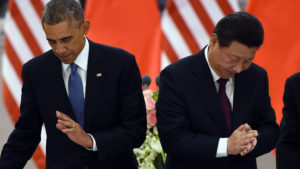
In the second installment of the virtual roundtable, Nisid Hajari discusses the impact of the U.S.-China rivalry on the rest of the region.

In the first installment of this 6-part virtual roundtable, Ambassador Kishore Mahbubani, gauges the ‘temperature’ of U.S.-China relations.

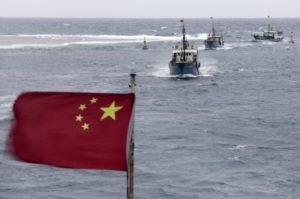
Last week, some 200 Chinese fishing boats were escorted by 13 coast guard vessels to waters just off Japanese-controlled islands claimed by both countries.
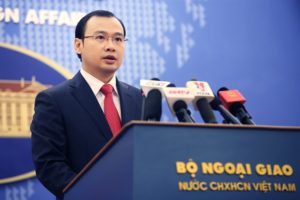
Now that an arbitral court in The Hague has ruled in favor of Manila over Beijing’s claims to the South China Sea, will Hanoi be next?

After months of intense negotiations, the US-South Korea Joint Working Group announced the deployment of the Terminal High Altitude Area Defense (THAAD).
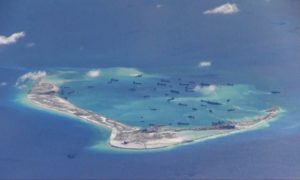
On July 12, an international tribunal in The Hague issued a scathing rebuttal to China’s expansive claims. What has been Beijing’s reaction so far?
What is the ‘China Model’? Answers vary, and it seems impossible to reach a consensus. However, one can look at the case of Guangdong for clues.
