
Incoherent U.S. foreign policy, combined with accelerating multipolarity, has increased global geopolitical risk for both major and minor states alike.
Incoherent U.S. foreign policy, combined with accelerating multipolarity, has increased global geopolitical risk for both major and minor states alike.
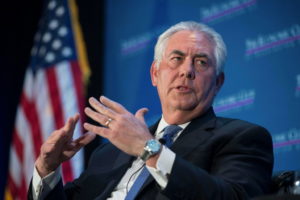
“We’re going to have to send China a clear signal that, first, the island-building stops and, second, your access to those islands also is not going to be allowed.”
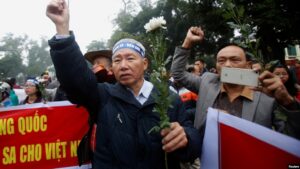
Vietnam and China pledged to settle disputes and to work toward a code of conduct for maritime operations after Party chief Nguyen Phu Trong’s visit to Beijing.

Comments from White House spokesman Sean Spicer on the South China Sea seem to have riled the Chinese and confused others who follow developments in the region.

In the aftermath of the Candlelight Revolution, the Korean people’s demands for constitutionally restructuring the post-1987 presidency have heightened.
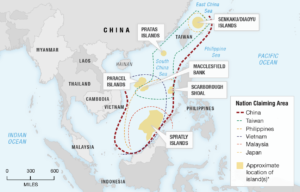
What makes Tillerson’s bellicosity even more absurd is that the U.S. position in the South China Sea has never been weaker.
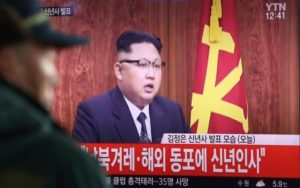
Pyongyang could decide to conduct a new ballistic test in the early weeks of the new administration to gauge President Trump’s response.

News outlets in China were ordered to “downplay” the U.S. inauguration, and to publish only reports from central state media.

The protest received little attention in the U.S. but was widely reported in China as evidence of “overseas Chinese” support for Beijing’s “one-China” policy.
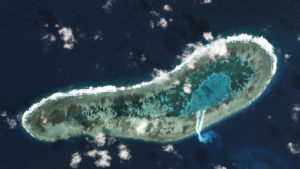
Hanoi has been actively fortifying its key holdings in the Spratlys, including the construction of a runway, tunnels and bunkers to defend its territory against China.

Tensions between Taiwan and mainland China will come to the U.S. this month, just in time for Trump’s inauguration as President of the United States.
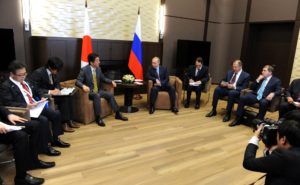
U.S.-Russian hostilities have decreased U.S. strategic options with respect to China, enabling Shinzo Abe’s own Russian diplomacy to be more fruitful.
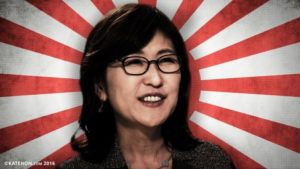
The visit sparked anger among the country’s neighbors—particularly China and South Korea—that suffered under Japanese occupation during World War II.
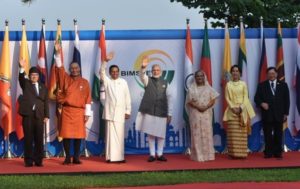
Trade blocs are often instruments of geopolitics. India’s cooperation with the South Asian nations east of Pakistan plays witness to this age-old truism.

Let’s get real: Taiwan has never been a part of the People’s Republic of China. Nor do most of its citizens have any interest in being part of the PRC.
