Foreign Policy Blogs

Topics

Mexico's human rights abuses: deeper than drugs

Human rights abuses have been making headlines almost daily in the burning hot battles of Mexico’s drug wars. From the horrific massacre of 72 migrants last week, to the gruesome display of four decapitated corpses strung from a bridge along with a warning sign, to human rights investigators gone MIA, the news is dark and […]

read more

Iran Loans More than $250 Million to Bolivia

Iran Loans More than $250 Million to Bolivia

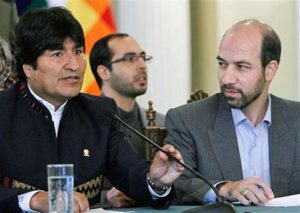
Interesting article from the Voice of America today. Of particular importance in this news: 1) the loan is intended to help “end the unilateralism” (President Evo Morales) of the world powers; and 2) the loan has no use restrictions. The lack of spending restrictions has been one of the biggest complaints against many of the […]

read more

Will Israel Attack Iran? Will US?

Jeffrey Goldberg’s article in the September Atlantic, in which he argues that Israel almost inevitably will attack Iran’s nuclear facilities before next summer unless the United States does so first, has attracted excessive attention. Devoid of new information and lacking in any kind of serious military analysis, it’s a far cry from meeting the Atlantic […]

read more

FARC Trades Cocaine for Arms from Venezuela

There is evidence that FARC has been trading cocaine for arms brokered by Venezuelan middlemen, entrepreneurs who are, at the same time, supplying weapons to Mexico.

read more

U.S. Turns the Page on Iraq

U.S. Turns the Page on Iraq

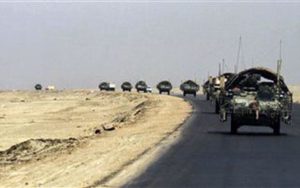
President Obama addressed the nation from the Oval Office yesterday to announce the end of combat operations in Iraq. Since then there has been a fair amount of media coverage and I’m very encouraged by that. I was beginning to worry that this major milestone in the history of the U.S. role in the world […]

read more

How Many Chinas Are There In China?

Nine.  At least that’s what The Atlantic said last year.  In an effort to demonstrate that China is not as monolithic as it may sometimes appear, The Atlantic published an interactive map on its website dividing the People’s Republic of China into nine regions (the interactive feature doesn’t currently work correctly, but you can find […]

read more

Note to Calderon: Look to Venezuela and Nicaragua for Smuggled Weapons

What US policymakers also fear is that the steady sale of arms to Venezuela from Russia, Iran, China, and Cuba, and the willingness of both Venezuela (Russian and Chinese arms) and Nicaragua (US-manufactured weapons) to resell firepower to criminal or insurgent elements throughout South and Central America (Mexico being the prize) will someday allow Chavez and Ortega to realize a common dream — power over a Socialist Empire that encompasses most or all of Central and South America.

read more

Lisa Jackson's EPA

Lisa Jackson's EPA

“Lisa Jackson is doing exactly what an Environmental Protection Agency Administrator is supposed to do – thoughtfully and carefully but aggressively implementing our environmental laws to protect public health and our environment. The job of the EPA Administrator is not to make people happy but to make them and their environment healthier.”  That was Time’s […]

read more

Why the U.S. Keeps Sending Ex-Presidents to North Korea

Why the U.S. Keeps Sending Ex-Presidents to North Korea

How do you pick an envoy for a “rescue” mission to North Korea?  Foreign Policy’s Josh Rogin looked at how this question was answered in the most recent case involving former President Jimmy Carter’s mission to Pyongyang to retrieve American citizen Aijalon Mahli Gomes.  It’s a good piece that also details the insider campaigns waged […]

read more

Has US Banking Gone Native?

We know that the global banking system is riddled with corruption (‘vulnerable’ to corruption may be more polite), some authored by its own principals, some embraced opportunistically by financial insiders to snatch sudden profits, a great deal ushered into the world’s financial system by bankers in search of the commissions and corporate profits that ‘high net-worth customers’ (in many cases, money launderers) bring in. And sometimes the bad guys exploit legitimate financial service providers. But the question remains, and it turns on the distinction between deregulation and irregularity, between fair play and laissez-faire, between the right of the ‘haves’ to have still more, and the right of the people to real economic protection under the law.
At what point does financial entrepreneurship turn criminal, and how blind an eye is the US prepared to turn toward banking practices that clearly prosper the powerful and imperil the growing ranks of the poor, in the United States and across the world?
read more

*Update: DFID Responds*

Left Foot Forward’s website is back up, posting this: “[International Development Secretary Andrew] Mitchell was quick to claim that the perception created by the leak was “total and utter bollocks” and that any new Government had the right to a “bottom up” review of existing practice. Mitchell insists that his new approach – focusing on […]

read more

British Aid To Become More Securitized

British Aid To Become More Securitized

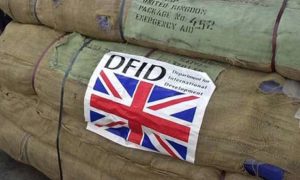
This week, Britain’s coalition government was accused of ”securitising” its international aid budget and demanding that British national security be placed at the heart of projects in the developing world. The shift in aid policy, signaled in a document prepared by the Department for International Development (DFID), suggests that the National Security Council – Britain’s […]

read more

Hospitals and innovation

Few think of hospitals as hotbeds for innovation.  However, two recent postings from Harvard Business Review (‘Why Innovation Thrives at the Mayo Clinic” and “Oslo Innovation Clinic Offers Treatment for Ideas“) indicate otherwise.

read more

U.S. Inspires New Constitution for Kenya

Many countries in the world have constitutions based on the models of the great imperial powers of Europe. It makes sense that former colonies would model themselves on Great Britain or France, for example, and shape their systems of government to mirror the ideal of parliamentary democracy. Rarer are the countries that have modeled themselves on the U.S. system of checks […]

read more

Born into Brothels (2003)

Born into Brothels (2003)

They live in the margins of society, the children of prostitutes in Calcutta, India. They are given time and space to discuss their lives with New York-based photographer Zana Briski. Briski, who co-directed the film with Ross Kauffman, started a photography class with several of these children. She gave them cameras and let them choose […]

read more