Foreign Policy Blogs

Uncategorized

Hurricane lessons from Cuban authorities

The Houston Chronicle highlighted some striking figures this week that are worth repeating: Cuba has a population of 11.4 million and an average monthly income of $17; the island lost 10% of its GDP last year in the damage caused by Hurricane Ike; but there were only 7 fatalities on the island caused by the disaster. This […]

read more

Nearing insolvency?

Foreign investors and businesses in Cuba are getting worried as the state-run banks on the island explain that they have little foreign currency for withdrawals and international transfers. Could the country be near insolvency? On top of low nickel prices, the hurricanes at the end of 2008, and the current global economic downturn, declaring insolvency […]

read more

The United States, Cuba and the Western Hemisphere

The United States, Cuba and the Western Hemisphere

In a Wall Street Journal piece this week, Jorge Castañeda suggested an intriguing solution to the U.S.-Cuban relationship problems. The obstacle halting further progress in changes to current policy, as many see it, is one of principles: if Obama were to lift the embargo unilaterally, he would be sending a message about democracy and human […]

read more

The dangers of metaphor

The dangers of metaphor

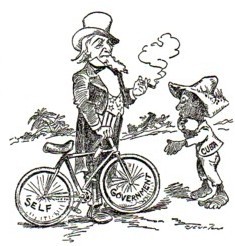
I attended a highly informative talk last week given by Lou Pérez, a University of North Carolina Professor of History and specialist on 20th century Cuba. In a week with so much activity revolving around Cuba, the United States and the hemisphere, he managed to skirt current events and instead delve into the historic relationship […]

read more

Disaggregating the Cuban-American community

Disaggregating the Cuban-American community

One of the perceived obstacles in the way of changing current U.S. policy toward Cuba is the Cuban-American community in the United States, largely localized (and certainly most vocal) in Miami-Dade County in Florida. It was only two years ago that the Miami-Dade County school board voted to ban the book Vamos a Cuba, a […]

read more

The Summit of the Americas: Obama's Open-Hand Approach to Diplomacy

The Summit of the Americas: Obama's Open-Hand Approach to Diplomacy

This weekend leaders from across the Americas have made their way to Trinidad and Tobago for the fifth meeting of the Summit of the Americas to discuss the future relations between nations in North and South America, the Caribbean and between others interest groups in the region. The Summit is often the centerpiece for inter-governmental […]

read more

As expected, Summit addresses Cuba

At the Summit of the Americas in Trinidad today, President Obama dealt with the issue of Cuba tactfully and, I think, in a way that will please leaders of many Latin American countries. He said that the United States is on a path toward changing the nature of its relationship with Cuba. The implication was […]

read more

Will There Ever Be a "Fortress Americas"? US and Chinese Investment Policy in Latin America

Will There Ever Be a "Fortress Americas"? US and Chinese Investment Policy in Latin America

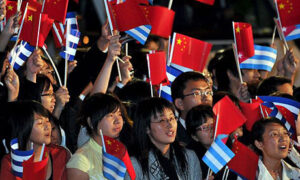
This week’s New York Times published a fascinating article about a topic that many experts on Latin America should find very intriguing. The article titled Deals Help China Expand Sway in Latin America by writers Romero and Barrionuevo was an analysis of China’s growing influence in Latin America, with examples of how Chinese liquid investment […]

read more

Perspectives: Cuba's success with HIV/AIDS

Perspectives: Cuba's success with HIV/AIDS

With all the hubbub in the United States and the hemisphere right now about the Washington-Havana relationship, let’s let it rest for today. The debate is hot as President Obama makes his first visit to Latin America, and John McAuliff’s note of the day provides very good grist for that mill. Instead let’s take up […]

read more

A few reactions to White House remittance and travel policy announcement

A wealth of sources are giving feedback after the White House announcement (from several perspectives): POV 1: the Obama administration made a big mistake in making these changes. Some Republicans in Congress, including Mario and Lincoln Diaz-Balart of Florida, are angered by the decision to lift restrictions on remittances and family travel. They oppose the […]

read more

The White House extends a hand: how will Cuba respond?

The Obama Administration went beyond expectations today when it announced not only the lifting of all travel and remittance restrictions for Cuban-Americans, but also an end to the telecommunications embargo that for years has kept Cuba using slow satellite connections instead of an easily accessible underwater fiber-optic cable. In a press release entitled “Reaching Out […]

read more

Tourism industry prepares itself

If U.S. citizens gain the right to travel to Cuba, experts are saying the immediate flow of visitors from the United States to the island would be great. “If the travel ban is lifted, you’ll probably see hundreds, hundreds of American yachtsmen going to Cuba the next day,” according to Timothy Ashby, a former U.S. […]

read more

Reuters 'postcards' to Obama

Reuters, a leading news and financial agency, recorded short videos of individuals in cities around the globe at the end of 2008, asking for postcard-length messages to the new U.S. President. Here is the postcard from Havana, with responses to the question: What message would you give to Obama? The answers: “Obama, you are the […]

read more

Nickel: Top export falling in value

Nickel: Top export falling in value

Cuba’s most important export industry, nickel production, is on the verge of being unprofitable after a persistent decline in international nickel prices. Nickel has accounted for over half of goods export earnings in recent years, and reserves remain plentiful. Indeed, the Holguin province of Cuba has around 34% of the world’s reserves. But falling prices […]

read more

CANF on board for policy change toward Cuba

CANF on board for policy change toward Cuba

Not long ago, the Cuban American National Foundation (CANF) was an incredibly conservative, hard-line exile group almost inextricably linked with the Republican party. After the Elián González controversy (2000-2001), the hard-liners split off to form the Cuban Liberty Council, leaving behind a more centrist/moderate CANF. That shift was considerable at the time, but the statement […]

read more