Foreign Policy Blogs

Uncategorized

On caudillos: Fidel Castro and Francisco Franco

On caudillos: Fidel Castro and Francisco Franco

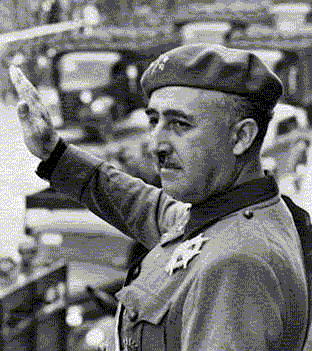
Anne Louise Bardach wrote a piece on “Fidel Castro’s Long Goodbye” for the Los Angeles Times today, including a note comparing the caudillo/dictator qualities of Fidel and Francisco Franco. Her interesting comment is excerpted here: Castro’s reluctant leave-taking—with its periodic near-finales—fits into a long tradition of Hispanic caudillos or dictators. Consider, for example, the life—and […]

read more

Distinguished Cuban intellectual in NYC, Miami

Distinguished Cuban intellectual in NYC, Miami

Dr. Eduardo Torres Cuevas is a Cuban national treasure. A professor of history at the University of Havana and Director of the José Martí National Library, he has received the National Literature Prize and the National Prize in Social Sciences of Cuba. His work focuses on topics of Cuban independence, abolition, slavery, popular religion, freemasonry, and […]

read more

Brazil's Unique Growth as a Unique BRIC

Brazil's Unique Growth as a Unique BRIC

November 10th brought much attention to Brazil as a blackout in Rio de Janeiro and Sao Paulo shrouded Brazilians in darkness. The rest of the world on the other hand is starting to see Brazil in a new light as the BBC World Service reported the announcement of the first steps towards physically accessing massive […]

read more

CNN on US companies in Havana

Havana held its 27th annual International Trade Fair last week (November 2-7), with 652 companies in attendance for a total of over 1,600 participants from 51 countries. Spain, Canada, China, Russia and Venezuela boasted the largest delegations at the Fair, and Italy, Germany, Mexico and Brazil also had considerable presence. Meanwhile, CNN ran a piece on […]

read more

Depleting ration books

Depleting ration books

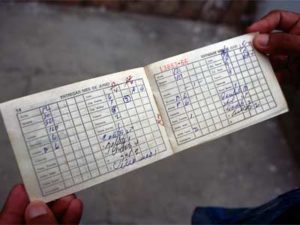
Last week potatoes and peas were dropped from the monthly ration books that Cubans depend upon as one of their main sources of food. Not having these products in the ration books means, of course, that potatoes and peas will no longer be rationed. Islanders can buy as much of them as they want, if […]

read more

Hear, hear, Congress

Hear, hear, Congress

House Representative Howard Berman (D-California) announced last week that the Committee on Foreign Affairs, of which he is chair, will hold an open hearing at 10 AM on November 18 on the topic “Is It Time to Lift the Ban on Travel to Cuba?“ The 47-member Committee includes representatives that are strongly in favor of […]

read more

Potential for stalemate: Cuba, the EU and the USA

Potential for stalemate: Cuba, the EU and the USA

Recent visits to Havana by EU aid minister Karel de Gucht and by Spanish Foreign Minister Miguel Angel Moratinos both addressed the issue of the European Union’s “common position” on Cuba, but from different sides. Moratinos wants to be entirely rid of the policy; de Gucht reinforced that it would only come down with concrete gestures from […]

read more

Cuba travel on the brain again

Cuba travel on the brain again

The newest bill in Congress to tear down the Cuba travel ban—the freedom to travel to Cuba act—has a greater chance of passing in this Congress than in previous years, as we’ve noted before. Several factors contribute: visiting Cuba is now being viewed as an issue of the inalienable rights of Americans to travel; the […]

read more

Spain as mediation

Spain as mediation

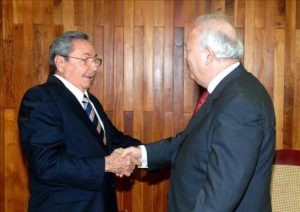
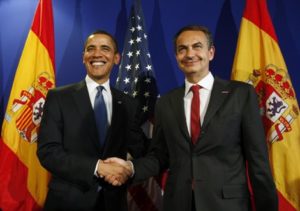
Spain’s Prime Minister, Jose Luis Zapatero, visited the White House on October 13, soon before the Spanish Foreign Minister, Miguel Angel Moratinos, paid a visit to Raúl Castro in Havana on October 19. According to Spain’s El País, President Obama used this opportunity to ask Spain to deliver a message to the Cuban regime. From […]

read more

UN vote condemns US embargo on Cuba

From the Associated Press: “The U.N. General Assembly on Wednesday overwhelmingly condemned the U.S. trade embargo on Cuba, an annual ritual that highlights global opposition to the policy. “This year’s vote was 187-3 in opposition to the embargo, up from 185-3 last year, with only Israel and the tiny Pacific island nation of Palau supporting […]

read more

Cuba vs Embargo: UN vote tomorrow

Cuba vs Embargo: UN vote tomorrow

Cuba’s official statement on the embargo, available on the “Cuba vs. Bloqueo 2009” website (here), details what it considers the direct effects of the embargo on the Cuban population. The report argues: The economic, commercial and financial embargo imposed by the United States on Cuba for the last 50 years is the most serious kind […]

read more

Marine cooperative efforts

Marine cooperative efforts

The Environmental Defense Fund is sending U.S. scientists to Cuba today to discuss ways to eliminate overfishing, protect coral reefs, conserve coastal areas, and tap potential ocean energy. Last month, EDF secured Treasury licenses for Cuban scientists to come to Mote Marine Laboratory in Sarasota, and this is a similar exchange—in the opposite direction. Ocean waters […]

read more

Pages from FPA's Global Film Review Blog

Pages from FPA's Global Film Review Blog

FPA Latin America blog is proud to bring you Sean Murphy from the FPA Global Film Review Blog who has posted two reviews recently about Latin American themed movies from around the world. The first film  is called Romero (1989) and is a film about the real Monsignor Romero who was one of the top […]

read more

On this day in 1962

Today, a look back at the still early U.S. relationship with post-revolutionary, Soviet-aligned Cuba. The piece from Politico below details the beginning of the Cuban missile crisis, whose anniversary is today. The main enemy in this story is the Soviet Union, but the intertwining of that country so closely with the regime in Cuba made geographical […]

read more

Waiting for a Revolution

PREMIERE: Adrian Baschuk’s “Cuba: Waiting for a Revolution” premiered tonight at 10/9c on Current TV. Baschuk, a Vanguard correspondent, reportedly visited Cuba to see “how hard life really is there and investigate whether or not there exists any possibility of regime change.” The thesis: frustration with persistent difficulty and worsening economic prospects in Cuba might […]

read more