“More than ever, foreign policy is economic policy. The world is competing for resources and global markets.” John Kerry Considering the positive trend of the past eighteen months, Somalia is en route to recovery, and, in due course, to re-engineer a better state from the ground up. The caveat being: in the long term, this […]
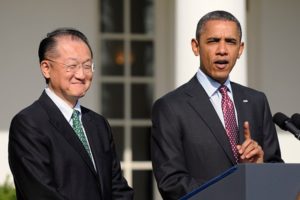
United States President Barack Obama announced today that he was nominating Dr. Jim Yong Kim for president of the World Bank. This was a surprise to almost everyone, as Dr. Kim is not a traditional pick by any means: a medical anthropologist and physician, current president of Dartmouth College, co-founder of the non-profit Partners in Health […]
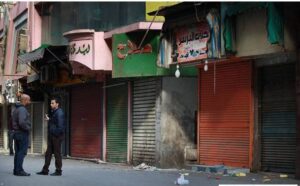
As developments unfolded in the Middle East and North Africa (MENA) during the past 8 months, one thing has become abundantly clear: the political transformation will not survive without an economic transformation. As many analyst have pointed out, an overwhelming motivation of the people who took to the streets with the ‘Arab Spring’ was the […]
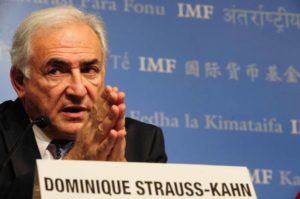
A power shift at the International Monetary Fund (IMF) in favor of Emerging Market nations has now set the stage for a fierce international battle over who should succeed Dominique Strauss-Kahn (DSK) as he battles well-publicized allegations of sexual assault in New York. The outcome of this struggle and may threaten the ‘gentlemen’s agreement’ […]
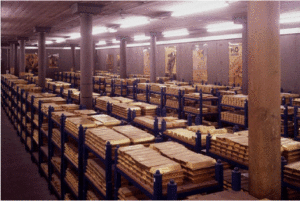
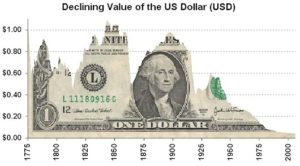
The Greenback has lost nearly 15% of its value against foreign currencies since the precipitation of the global financial crisis in 2008, and almost 5% since the end of last year. As a result, in 2010, Central Banks around the World became net buyers of Gold reserves for the first time in two decades, adding 87 metric tons of gold in government purchases by countries such as Saudi Arabia, Brazil, Cuba, South Korea, Bolivia, India, Russia and Nigeria, according to World Gold Council data. Interestingly, OPEC which denominates its oil reserves in US Dollars, has recently floated the notion of ditching the Greenback in favor of either the Euro or Gold as an alternative reserve denomination. China, with more than $3 Trn in foreign currency reserves, plans to set up new sovereign funds to invest in precious metals. Russia alone bought 8 tons of gold in 1st Q 2011. As developing countries accelerate purchases, gold may reach $2,000 per ounce this year,
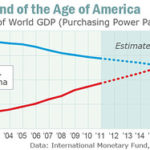
A new study by the International Monetary Fund (IMF) forecasts that the so-called “Age of America” will end in 2016, stating, ‘we are witnessing the end of American economic hegemony in the World.’
Long viewed as a safe investment in times of economic turmoil, the US dollar, also known as ‘Greenbacks,’ may be losing its safe haven appeal as it suffers strong downward pressures resulting from rising oil & commodity prices, high Federal budget deficits, soaring national debts and economic uncertainty in the aftermath of several financial crises.
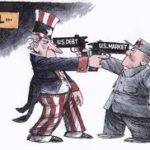
Paraphrase of NYTs Helene Cooper’s 26 Nov 2010 article: A fundamental tenet of foreign affairs doctrine holds that sovereign nations will always define and act in their own national interests, and will rarely against their own interests. Somebody needs to tell that to the United States when it comes to China, many foreign policy experts say. A key part of America’s relationship with China now turns on a question that is, at its heart, an interminable conundrum: How to get Beijing to do what its leaders don’t believe are good for their country, but will benefit ours? From economics to climate change to currency to Iran and finally culminating with North Korea last week, America has sought to push, prod and cajole China, to little or no avail.
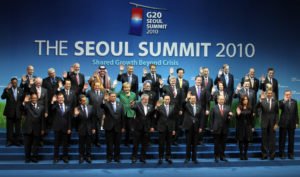
G-20 world leaders meeting in Seoul, South Korea, concluded the summit late Friday by issuing a joint communiqué, with no specifics, agreeing only in general terms to curb “persistently large imbalances” in saving and spending. But deep divisions, especially over the US-China currency dispute, left G-20 officials negotiating all night to draft a watered-down statement for the leaders to endorse, keeping alive a dispute that raises fears of a global trade & currency war, and fears of rising protectionism among nations.
The IMF delegation led by Mr. Adnan Mazerei met Pakistani authorities to discuss IMF’s Stand-by-Arrangement to patch together economic aid and assistance to Pakistan as it builds out of the recent summer floods. A press release was put out by the mission. It reads, in part: “Progress has been made regarding the measures to be […]
As the recession hit; the jobless rates soared to 10% and more, banks at the brink of failing, stock exchange plummeted, and economy was left paralyzed. All this happened in United States, which sparked a global recession, bringing down Europe and Asia along with it. This global recession was worst on developing nations, as they […]
Philippines: China and the Philippines signed two major agreements last week. The first agreement, the Joint Action Plan for Strategic Cooperation, is a bilateral relations road map for the next five years. The second, the Philippines-China Consular Agreement, is the first consular agreement that the Philippines has negotiated with another nation. This agreement includes notification […]
Foreign Policy Blogs is a network of global affairs blogs and a supplement to the Foreign Policy Association’s Great Decisions program. Staffed by professional contributors from the worlds of journalism, academia, business, non-profits and think tanks, the FPB network tracks global developments on Great Decisions 2014 topics, daily. The FPB network is a production of the Foreign Policy Association.