
Still, there is hope that the May Day Parade will just remain as it has been since 1989 — simply a parade celebrating the end of a war, as opposed to a catalyst for further conflict.
Still, there is hope that the May Day Parade will just remain as it has been since 1989 — simply a parade celebrating the end of a war, as opposed to a catalyst for further conflict.

“Liberty cabbage.” “Freedom fries.” And in Russia, there is now “Crimean Butter,” a new cheese brand introduced to consumers after the annexation of Sevastopol by the Russian Federation last spring.

The murder of Russian opposition leader Boris Nemtsov acted as a sobering reminder of Vladimir Putin’s ironclad grip on power.

After twelve months, which have brought little change on the ground, a simple disarming slogan continues to function as the justification for Russia’s internationally condemned annexation: “at least they’re not shooting here.”
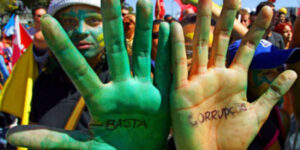
For both Russia and Brazil, though, it seems like corruption isn’t going anywhere anytime soon.
In terms of security policy, 2014 was unique for Europe. In this context, a new priority setting in security policy was a necessity.

The recent meeting of German, French, Russian and Ukrainian leaders to begin a cease-fire in Eastern Ukraine has already been broken.
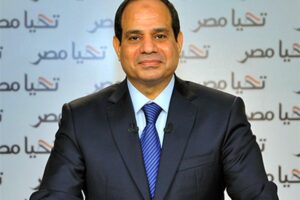
Since the Egyptian military ousted former President Mohammed Morsi and the Muslim Brotherhood government in a coup in July 2013, a stricter and an increasingly oppressive rule governs Africa’s third most populous country, but one that may not be that unwelcome with the U.S. or its allies.
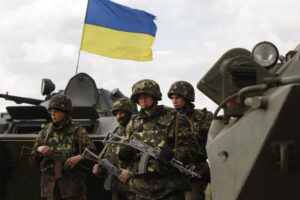
As the latest round of peace talks aimed at putting an end to the crisis in Ukraine continues in Minsk, debate is growing in Washington about the virtues of providing Kiev with military equipment for its ongoing offensive against the pro-Russian rebels who control the country’s easternmost regions.
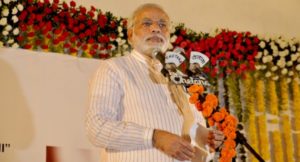
Indian Prime Minister Narendra Modi’s invitation to Barack Obama to attend India’s Republic Day on Monday was not only a great honor bestowed upon the U.S. president but also packed with implications for Chinese foreign policy and influence in the Asia Pacific.
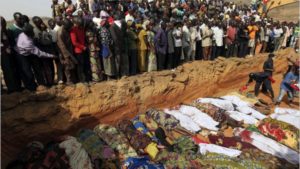
If the reports of the dead are true, this would be Boko Haram’s deadliest attack to date. War between the Islamic extremist group and Nigeria began in 2009, and has claimed an estimated 13,000 lives in six years.

The rapid rise in the value of the U.S. dollar and the effect of new riches in the U.S. energy market has left many adversaries of the U.S. with serious future financial issues

Ambassador Hill sat down with Reza Akhlaghi of the Foreign Policy Association to discuss his new book and share his views on U.S. foreign policy.
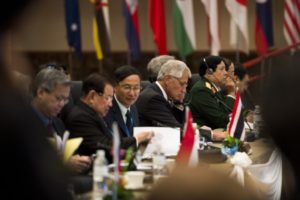
Last week saw yet another meeting of the Association of Southeast Asian Nations (ASEAN) which was hosted by Myanmar President Thein Sein on Nov. 12 and 13. ASEAN nations had initially hoped for further progress on territorial issues related to the East and South China Seas, yet once again came away with little agreement from Beijing.

While the U.S. and the coalition against ISIS make attacks on targets in Iraq and Syria, there remains an uneasy relationship between Assad’s government and the U.S.