
On Wednesday, Brazilian President Dilma Rousseff tried to salvage the damage caused by the Petrobras scandal by issuing a wave of anti-corruption measures.

On Wednesday, Brazilian President Dilma Rousseff tried to salvage the damage caused by the Petrobras scandal by issuing a wave of anti-corruption measures.

China recently became the world’s 3rd largest exporter of weapons systems behind the US and Russia. While analysts are concerned with Stealth fighters, Ballistic missile systems and chemical weapons proliferation, the distribution of artillery and anti-aircraft systems will likely have a larger effect on the political and defensive environment in many of the purchasing countries than WMDs.
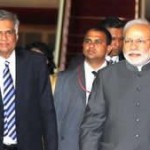
Ahead of India Prime Minister Narendra Modi’s visit to Sri Lanka on Friday, Indian Foreign Secretary S. Jaishankar announced New Delhi’s cooperation with Sri Lanka’s new government on the repatriation of 100,000 Tamils currently residing in the southern state of Tamil Nadu.
Congress is potentially going to passing a new Authorization of Use of Military Force (AUMF) bill to sanction the Obama administration’s air strikes against the Islamic State in Iraq and Syria (ISIS).

Last week, Israeli Prime Minister Netanyahu addressed Congress. President Obama was not pleased.
This week, Sarwar Kashmeri of the Foreign Policy Association spoke to Dr. Rajan Menon, a Anne and Bernard Spitzer Professor of Political Science at the Powell School, City College of New York/City University of New York.
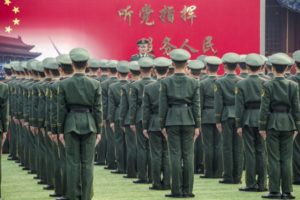
Beijing’s announcement on Thursday of a 10 percent increase in military spending, to $145 billion, marks the fifth consecutive year of double-digit increases, and is not without significant repercussions in Asia.
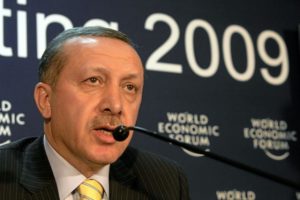
Turkey’s historically troubled relationship with its Kurdish population has become less tense since the Justice and Development Party’s (AKP) founder and current President of Turkey, Recep Tayyip Erdogan, became prime minister in 2003.

As Russian-backed separatists sneer at the Minsk II cease fire, extolling their newly conquered strategic pile of rubble, the town of Debaltseve, the Cypriot president Nicos Anastasiades flew to Moscow in a tizzy for a two-day official visit.
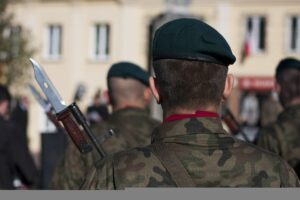
In terms of security policy, 2014 was unique for Europe. In this context, a new priority setting in security policy was a necessity.

The expected Tuesday address to U.S Congress by the Israeli Prime Minister, Benjamin Netanyahu has stirred vibrant debates about the potential impact of the address on U.S.-Israeli relations and on the fate of ongoing nuclear negotiations between U.S. and its chief regional adversary: Iran.
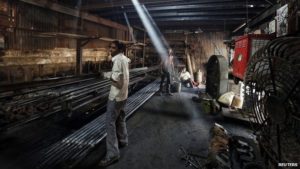
Tired of corruption and stagnation, India voted the reform-minded Bharatiya Janata Party (BJP) into power in May 2014.
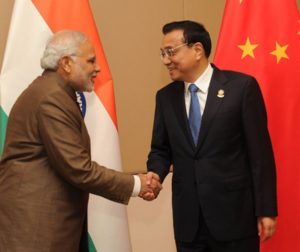
Last Friday, Beijing reacted strongly to Indian Prime Minister Narendra Modi’s visit to India’s disputed border area with China, to mark the 28th anniversary of the establishment of Arunachal Pradesh as an Indian state.

The recent meeting of German, French, Russian and Ukrainian leaders to begin a cease-fire in Eastern Ukraine has already been broken.
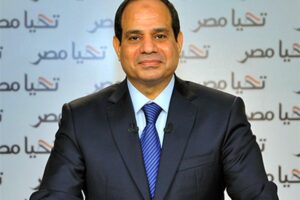
Since the Egyptian military ousted former President Mohammed Morsi and the Muslim Brotherhood government in a coup in July 2013, a stricter and an increasingly oppressive rule governs Africa’s third most populous country, but one that may not be that unwelcome with the U.S. or its allies.