Foreign Policy Blogs

Development

No Job, No Pay

No Job, No Pay

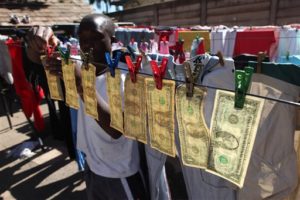
I had dinner last night with a friend who works for a large international development organization (which will go unnamed) here in D.C. This is her first job out of undergrad, and she was giving me a description of her first week, most of which involved sorting through resumes for several positions in the organization’s […]

read more

Administration gets defensive with GHI

Commentary about President Obama’s Global Health Initiative has been coming fast and furiously this month, not least from the White House.  The initiative is caught between a rock and a hard place, with the steady goodwill of AIDS-affected country built up over the last decade and a Congress which is hard-pressed to increase development aid in […]

read more

Reverse innovation in global health

A theme that I’ve been following over the last few months (ever since reading about Nigel Crisp‘s ideas in “Turning the World Upside Down”) is how innovation can transfer from developing economies to developed, particularly in the field of public health.  So I was interested to read Vijay Govindarajan’s recent conversation in the Harvard Business Review about how Aravind […]

read more

A Call for New African Growth

Read Gordon Brown’s speech to African leaders given in Kampala, Uganda this week: “…that the job of aid is to kick start business-led growth and not to replace it. And so I believe we need to focus not just on poverty – but on growth. Not just on providing services for the poor, but on […]

read more

Friday Spotlight: Peepoo

Friday Spotlight: Peepoo

Every Friday, I’m going to try to introduce a new aid innovation/organization. This week: the Peepoo bag, somewhat predictably from the minds of the Swedes. The Peepoo bag is a one-use personal toilet, a light green, biodegradable bag lined with a coating of urea. It’s meant to be placed in a bucket, or other convenient […]

read more

The power of new technology

There is a muted but ongoing debate about whether a country can be democratic and fight corruption at the same time (see Success stories). A related debate concerns economic development. Thus, can the undemocratic Chinese government achieve the economic growth it aspires to without increasing accountability? Some people hold up China’s stellar performance as evidence […]

read more

Greeks Bearing Gifts?

Greeks Bearing Gifts?

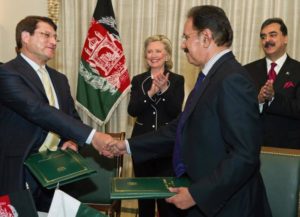
Yesterday, Secretary of State Hillary Clinton arrived in Islamabad to start a two-day visit aimed at improving U.S./Pakistan relations and to solidify Pakistan’s support of U.S. efforts in Afghanistan. A major part of Secretary Clinton’s strategy is a $500 million package in economic and development aid, particularly for hospitals, hydroelectric plants, and clean drinking water […]

read more

The Wines of Southern Ethiopia

The Wines of Southern Ethiopia

I’ve been thinking a lot about a New York Times article from last November about land acquisition in Africa. At the time the article was published, I was nearing the end of a six-month stay in Ethiopia, where I was working for a Johns Hopkins affiliated NGO providing technical assistance to HIV/AIDS programs in the […]

read more

Howzit?

Howzit?

Hello, everyone! My name is Keena Seyfarth and I’m thrilled to be blogging for the Foreign Policy Association on development aid. I have lived and worked in Africa for most of my life, and am currently in graduate school for a combination Masters degree in International Health and Humanitarian Assistance at the Bloomberg School of […]

read more

Good health on Mandela Day

Happy Mandela Day!  The UN has adopted July 18th as Mandela Day, described as a “global movement to take his life’s work into a new century and change our world for the better”.  The idea is to donate 67 minutes of your day to doing something good…in commemoration of the 67 years that Nelson Mandela […]

read more

What does "Drive" mean for behaviour change?

So I’m a bit jetlagged.  I’m watching Dan Pink’s entertainingly animated talk at the RSA from April, considering the implications for behaviour change and global health.  If human motivation is nuanced in the way that Pink argues, and our institutions are hardwired to consider only the most basic of our innate desires – what does […]

read more

Keeping up around the world

I’m in the US for a couple of weeks, visiting family and, importantly, experiencing the joys of speedier internet access.  What will I be watching?  First, I’ll be keeping up with the happenings in Vienna with the webcasts from the XVIII International AIDS Conference.  I’ll also be catching up on the 2010 Aspen Ideas Festival Global Health track by browsing the video […]

read more

Leading the HIV prevention revolution

UNAIDS has released a report in advance of this week’s XVIII International AIDS Conference in Vienna with the title “Young People are Leading the HIV Prevention Revolution“.  The study says: The report shows that for the first time reductions in HIV prevalence among young people have coincided with a change in sexual behaviour patterns among people.  The […]

read more

PEPFAR and unintended consequences

PEPFAR and unintended consequences

Princeton Lyman and Stephen Wittels of the Council on Foreign Relations have written a thoughtful article in the July/August issue of Foreign Affairs (No Good Deed Goes Unpunished: The Unintended Consequences of Washington’s HIV/AIDS Programs).  Far less sensationalist than the NYTimes reporting in May, this in-depth analysis explores the paradox that US commitments supporting HIV […]

read more

A global movement for age-friendly cities

The WHO has launched the Global Network of Age-Friendly Cities, an effort to link cities who “address the environmental and social factors that contribute to active and health ageing in societies.”  This is in response to statistics cited on the WHO site, including: (1) In 2000, more than 600 million people in the world were […]

read more