
On Mischief Reef, in the South China Sea just off the coast of the Philippine island of Palawan, Chinese workers are busy dredging sand and creating an island on top of partially-submerged coral reefs.
On Mischief Reef, in the South China Sea just off the coast of the Philippine island of Palawan, Chinese workers are busy dredging sand and creating an island on top of partially-submerged coral reefs.

While these institutions have made some headway in meeting the infrastructure needs of Asian countries, some critics of the World Bank and ADB argue they are slow and bureaucratic, and impose stifling environmental and social constraints which deter investment.

China recently became the world’s 3rd largest exporter of weapons systems behind the US and Russia. While analysts are concerned with Stealth fighters, Ballistic missile systems and chemical weapons proliferation, the distribution of artillery and anti-aircraft systems will likely have a larger effect on the political and defensive environment in many of the purchasing countries than WMDs.
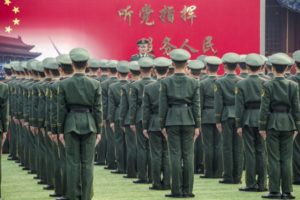
Beijing’s announcement on Thursday of a 10 percent increase in military spending, to $145 billion, marks the fifth consecutive year of double-digit increases, and is not without significant repercussions in Asia.
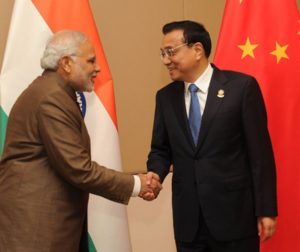
Last Friday, Beijing reacted strongly to Indian Prime Minister Narendra Modi’s visit to India’s disputed border area with China, to mark the 28th anniversary of the establishment of Arunachal Pradesh as an Indian state.

On Feb. 19, Chinese from around the world welcomed the year of the sheep, also celebrated as the year of the goat or ram.
In his first foreign trip since assuming power, Sri Lankan President Maithripala Sirisena will visit India on Feb. 16 for two days, hailing a potential warming of relations between the two countries.
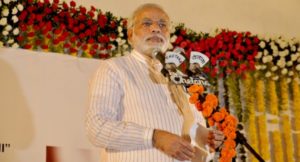
Indian Prime Minister Narendra Modi’s invitation to Barack Obama to attend India’s Republic Day on Monday was not only a great honor bestowed upon the U.S. president but also packed with implications for Chinese foreign policy and influence in the Asia Pacific.
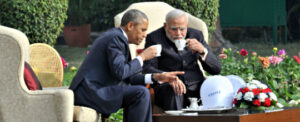
Before Narendra Modi became the prime minister of India, some observers in China believed that he could well be “the Deng Xiaoping of India,” comparing him with the Chinese leader who led the economic reform that has transformed China to a global power from a Third World country.

The disputed waters of the South China Sea have been quiet recently, as a nationalistic Beijing has sought to reassure its neighbors of its peaceful intentions by toning down the rhetoric and hesitating from taking any further aggressive actions.
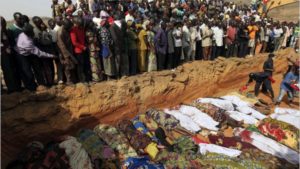
If the reports of the dead are true, this would be Boko Haram’s deadliest attack to date. War between the Islamic extremist group and Nigeria began in 2009, and has claimed an estimated 13,000 lives in six years.
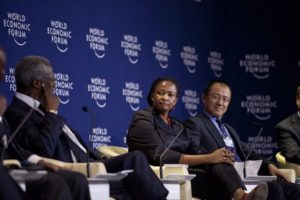
With the recent U.S. “pivot to Asia,” some analysts argue the U.S. is losing interest and influence in Africa, resulting in China overtaking the United States as Africa’s largest trading partner.

Last Thursday, a Vietnamese wooden fishing boat returning to the central province of Quang Ngai was badly damaged following attacks from three Chinese vessels near the Paracel Islands, which the Vietnamese call the Hoang Sa.
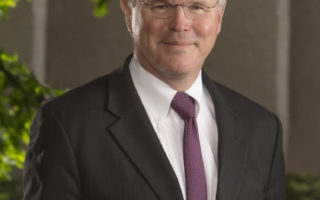
Ambassador Hill sat down with Reza Akhlaghi of the Foreign Policy Association to discuss his new book and share his views on U.S. foreign policy.
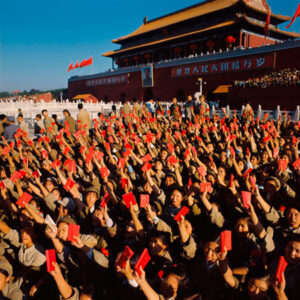
Xi Jinping is starting to act a lot like Mao Zedong — strong, assertive, patriotic, man of the people — and willing to promote or condone the same techniques Mao used for controlling the masses through party propaganda.