
By seeking to improve ties with both China and Russia, the Philippines aims to enhance its bargaining position with the U.S.
By seeking to improve ties with both China and Russia, the Philippines aims to enhance its bargaining position with the U.S.
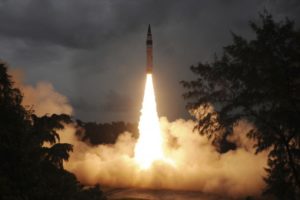
Maybe the U.S. is ready to adopt a “no first use” policy for its nuclear arsenal but its allies, dependent on America’s “nuclear umbrella”, are not.

Post-war Japan’s constitution was an avant-garde collage of high-edge liberal democratic universal norms that revolutionized an outmoded governance system.
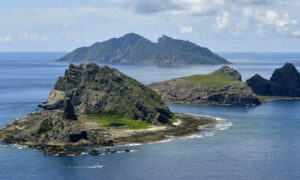
Last week, some 200 Chinese fishing boats were escorted by 13 coast guard vessels to waters just off Japanese-controlled islands claimed by both countries.

Japan’s desire to become a more “normal” power through South China Sea proclamations has just become more complicated thanks to Russia.

Britain, along with Japan, Canada, Australia, Korea and Norway could create a network of safe and neutral financial and service havens: the G4N.
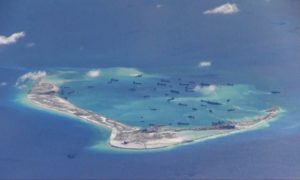
On July 12, an international tribunal in The Hague issued a scathing rebuttal to China’s expansive claims. What has been Beijing’s reaction so far?
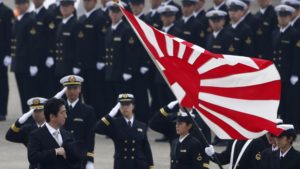
Shinzo Abe’s victory in the Upper House elections on July 10 marks a memorable success for the Liberal Democratic Party-led coalition.
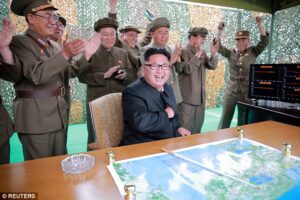
North Korea’s latest missile test represents an evident shift in the region’s balance of power, threatening the U.S. and its allies.

Japan realizes, irrespective of U.S. wishes, that it needs better relations with Russia in order to more effectively balance China within the region.
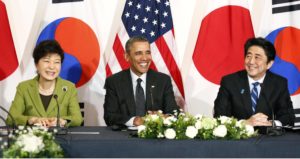
At Hiroshima, the U.S. should project a tone of deepening conciliation, highlighting that the real cement between us and other nations—in Europe, Asia, Australia, and the Americas—is a culture of freedom.
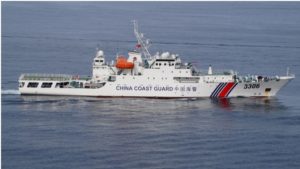
The incident last week was not a one-off: there have been dozens of attacks by Chinese vessels on Vietnamese fishing boats in the Paracel Island chain since last year.
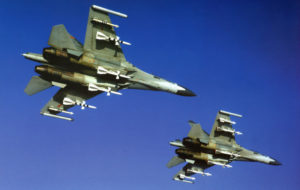
In a potential geopolitical tit-for-tat, some analysts warn Beijing may soon declare an air defense identification zone (ADIZ) in the South China Sea, should the U.S. go ahead with plans to conduct a freedom of navigation exercise announced for April.
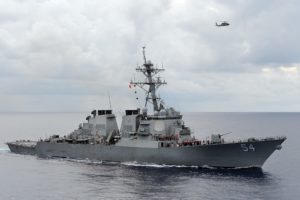
On Friday, the U.S. Navy officially announced another episode of its planned “freedom of navigation” series in the South China Sea, shortly after U.S. President Barack Obama met with Chinese President Xi Jinping at a nuclear summit in Washington.
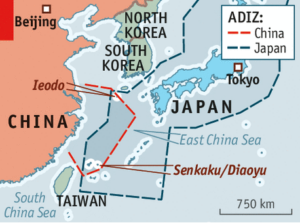
On Wednesday, U.S. Deputy Secretary of Defense Robert Work warned Beijing against declaring an exclusion zone in the South China Sea, calling any potential announcement as “destabilizing,” and vowing the United States would not recognize such a zone.